Repair What Is Broken: Why Reparations Are a Biblical Issue
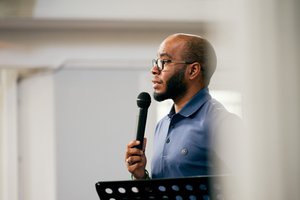
On Sunday 2nd August, I preached from Luke 19:1–10, the story of Jesus and Zacchaeus. I have returned to that passage as we prepare for Carry Wi Story, Lest We Forget: A Service of Remembrance, Justice and Repair on Sunday 6 September, 2pm.
The service is about carrying the stories of people who experienced injustice of the transatlantic slave trade. This is important because repair begins with truth. Healing cannot take place without acknowledging the damage and ignoring those who have lived with its consequences.
Grace that leads to repair
Zacchaeus had become wealthy within a system of exploitation. Yet Jesus noticed him, called him by name and chose to enter his home.
Grace came first. Zacchaeus did not earn Jesus’ welcome. But receiving that grace changed what he did with his wealth. He promised to give half his possessions to the poor and repay four times what he had taken from anyone he had cheated.
Zacchaeus did not simply say sorry. His repentance became visible through restitution. Jesus then declared that salvation had come to his house. The gospel is freely given, but it does not leave injustice untouched. It forms people who tell the truth, turn around and seek to repair the harm that has been done.
Carrying the story
Scripture repeatedly commands God’s people to remember. In Hebrews in the old testament was told to remember that they had been enslaved in Egypt and to carry that story into each generation.
This was not intended to trap them in the past. Remembering slavery was meant to shape how they treated workers, migrants, people in poverty and those without power. The story they carried became an ethical responsibility of how to relate to others.
The theologian Miroslav Volf explores this in The End of Memory: Remembering Rightly in a Violent World. Volf argues that remembering wrongdoing can help us resist it, while warning that memory can also be distorted and used to continue hostility. The challenge is to remember truthfully and in ways that serve justice, healing and reconciliation rather than revenge.
Carrying someone’s story means refusing to erase what happened. It also means refusing to reduce people to what was done to them. We remember suffering alongside faith, resistance, courage, culture and survival. For we have a saviour who experience the injustice and sin of the world, every time we gather for worship and communion we remember.
Restitution throughout Scripture
The principle of restitution runs through the Old Testament. Exodus 22 requires those who steal to repay what was taken. Leviticus 6 teaches that someone who defrauds another person must make restitution before bringing an offering to God. Worship cannot be used to avoid responsibility towards those we have harmed.
The Sabbath year and Jubilee laws challenged permanent cycles of debt, servitude and dispossession. In Ezra, generations after Jerusalem had been conquered, what had been taken was returned and public resources helped rebuild what had been destroyed.
These passages are not ready-made modern policies, but they reveal something about God’s justice: wrongdoing should be acknowledged, what was taken should be restored and its damage should not simply be allowed to continue.
Thabiti Anyabwile develops this biblical principle in his Gospel Coalition article, “Reparations Are Biblical” (Read More Here). He distinguishes the principle of reparations from particular programmes. Christians may debate the details of a policy while still recognising the biblical basis of restitution.
This conversation is also developing internationally. In 2022, the Baptist World Alliance adopted a resolution on slavery reparations (Read more here). It affirms the biblical basis for reparations, laments Baptist involvement in slavery and calls Baptist institutions to examine their histories and explore appropriate forms of repair.
Repair What Is Broken
This connects directly with one of our values we have exploring at NPR: Repair What Is Broken. Jesus brings restoration where life has been damaged. We join his work through compassion, justice and practical action.
We choose to resist indifference, injustice and the belief that someone else will deal with it.
The Service on Sunday the 6th cannot repair centuries of harm or answer every question about reparations. But it can help us refuse indifference. We can listen, remember, lament, pray and ask what justice rooted in the gospel requires of us.
Last year, as we studied the book of Revelation, we saw that Scripture does not hide the suffering caused by unjust powers. Yet it ends with a renewed creation, people from every nation gathered before God and the nations receiving healing.
Whenever the Church tells the truth and participates in repairing harm, we offer a small sign of that coming kingdom. This is part of the legacy I hope NPR will help create: ordinary people, loving extraordinarily, seeking justice as part of following Jesus.
Carry Wi Story, Lest We Forget begins at 2pm on Sunday 6th September 2026 at New Park Road Baptist Church and online.
Come ready to listen, remember and consider what justice and repair might require of us. Please share the invitation with friends, family and others in our community who care about justice. Attendance is free, but places are limited. Register to attend or receive the livestream here.